
Effective addiction counselor training draws from more than one area of knowledge. Counselors may need to understand behavioral change, counseling skills, substance effects, mental health, trauma, culture, ethics, documentation, treatment planning, and collaboration with other professionals. In Colorado, required training for addiction counselor credentials reflects this breadth, with coursework that develops both clinical knowledge and practical counseling skills.
Addiction counseling involves people whose needs rarely fit into one simple category. Substance use can intersect with mental health symptoms, physical health, trauma, family relationships, culture, environment, motivation, legal concerns, and access to treatment. That is why strong addiction counselor training should help students look at clients from multiple perspectives rather than relying on one theory or technique.
At Colorado Counselor Training, we offer coursework for people pursuing Colorado’s Certified Addiction Technician (CAT), Certified Addiction Specialist (CAS), and Licensed Addiction Counselor (LAC) pathways. Our courses cover different areas of addiction counseling so students can build the knowledge and practical skills needed for their level of training.
What Does a Multidisciplinary Approach Mean in Addiction Counselor Training?
A multidisciplinary approach means examining addiction and recovery through several relevant areas of knowledge rather than treating substance use as an isolated behavior.
That can include:
- Counseling and behavior-change skills
- Psychological and co-occurring mental health concerns
- Pharmacology and the physiological effects of substances
- Trauma-informed care
- Cultural and social influences
- Ethical and legal responsibilities
- Assessment and treatment planning
- Documentation and case management
- Group counseling
- Clinical supervision at more advanced levels
The objective is not to turn addiction counselors into physicians, psychologists, social workers, or other professionals outside their scope. Instead, training helps counselors understand how different factors may affect the person receiving treatment and when coordination, referral, or additional expertise may be appropriate.
Why Isn’t One Counseling Theory Enough?
Clients with substance use concerns can differ significantly in their motivation, history, health, environment, strengths, treatment needs, and recovery goals.
A counselor may encounter a client who is ambivalent about changing substance use, another who has significant trauma history, and another whose substance use occurs alongside depression, anxiety, or another mental health disorder.
That is why addiction counseling education typically combines multiple areas of competency.
Colorado Counselor Training’s current course offerings, for example, include motivational interviewing, cognitive behavioral therapy, co-occurring disorders, trauma-informed care, culturally informed treatment, pharmacology, documentation, ethics, and group counseling.
Each addresses a different part of the counselor’s work.
How Do Different Perspectives Fit Together?
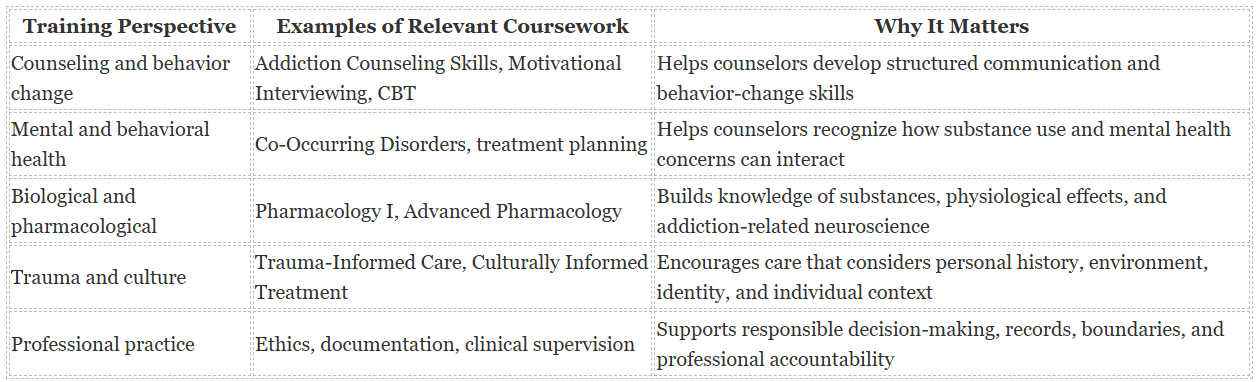
Counseling Skills and Motivation for Change
Knowledge about addiction is important, but counselors also need practical interpersonal skills.
Our CAT coursework includes Addiction Counseling Skills and Motivational Interviewing. These courses focus on communication, client engagement, behavior change, and the practical application of counseling techniques.
For example, the Addiction Counseling Skills course uses a client-centered counseling framework and incorporates feedback on counseling skills. Motivational Interviewing builds on those skills by helping students understand how to work with motivation, ambivalence, and readiness for change.
This part of training helps connect theory with what actually occurs in a counseling conversation.
Understanding Co-Occurring Mental Health Concerns
Substance use disorders and mental health disorders can occur at the same time. Counselors therefore need enough understanding of co-occurring conditions to recognize their importance and work within their professional scope.
The CAS-level Co-Occurring Disorders course addresses the relationship between mental health and substance use disorders, diagnostic considerations, treatment approaches, service planning, and the role medications may play in integrated treatment.
This does not mean an addiction counselor automatically practices outside the scope authorized by their credential. It means training can help the counselor understand when mental health concerns may affect treatment and when collaboration or referral may be needed.
Why Pharmacology and Neuroscience Matter
Addiction counseling is behavioral health work, but understanding substances and their effects is also important.
Current coursework includes Pharmacology I, which addresses commonly used substances, physical effects, withdrawal, and related concepts. More advanced training includes neuroscience, medical considerations, and pharmacological approaches used in recovery.
This knowledge helps counselors better understand the biological side of substance use without confusing the counselor’s role with medical diagnosis or prescribing.
Trauma-Informed and Culturally Informed Care
People do not enter counseling without context. Culture, family, social conditions, past experiences, identity, trauma, and access to resources can all affect how a person experiences treatment.
Colorado Counselor Training includes coursework in both trauma-informed care and culturally informed treatment.
Trauma-informed training focuses on understanding how trauma can affect functioning and how treatment environments can support a greater sense of safety.
Culturally informed treatment examines how culture and diversity may influence treatment engagement, barriers, communication, and recovery.
Neither approach means making assumptions about a client based on background. The goal is to help counselors pay attention to the individual context affecting the person in front of them.
Ethics, Documentation, and Professional Responsibility
Addiction counseling involves more than counseling techniques. Students also need to understand professional responsibilities.
Current training includes topics such as:
- Ethical decision-making
- Colorado mental health practice requirements
- Confidentiality
- Clinical records
- Informed consent
- Treatment planning
- Progress documentation
- Professional boundaries
These topics matter because effective counseling must also be ethical, appropriately documented, and consistent with the counselor’s legal and professional responsibilities.
What Are Colorado’s Current Addiction Counselor Credentials?
Students researching certified addiction counselor training may still encounter the term “CAC” in older webpages, documents, and search results. Colorado’s current state-issued credential designations are:
- CAT — Certified Addiction Technician
- CAS — Certified Addiction Specialist
- LAC — Licensed Addiction Counselor
The Colorado Department of Regulatory Agencies’ State Board of Addiction Counselor Examiners is responsible for issuing these certifications and licenses to applicants who satisfy the applicable requirements.
The Colorado Behavioral Health rules establish educational requirements for addiction counselor credential pathways. Students should always check the current state requirements because credentialing rules can change.
How Do CAT, CAS, and LAC Training Differ?
The appropriate pathway depends on a student’s education, career goals, experience, and intended scope of practice. Colorado Counselor Training currently organizes its counselor training programs in Colorado around the CAT, CAS, and LAC pathways.
Certified Addiction Technician (CAT)
CAT training provides a foundation in addiction counseling. Current state training requirements include nine individual courses or trainings addressing counseling theories, treatment methods, and addiction counselor competencies.
Our CAT course offerings include counseling skills, documentation, culturally informed treatment, ethics, group counseling, motivational interviewing, pharmacology, principles of addiction treatment, and trauma-informed care.
Certified Addiction Specialist (CAS)
CAS builds on foundational addiction counseling education with more advanced subjects. Current coursework offered through our CAS training pathway includes areas such as assessment, cognitive behavioral therapy, co-occurring disorders, advanced pharmacology, advanced motivational interviewing, specialized treatment, ethics, and clinical supervision.
Licensed Addiction Counselor (LAC)
LAC is a license rather than a certification and includes graduate-degree requirements in addition to applicable addiction-specific education, experience, examinations, and other state requirements.
Students considering the LAC coursework pathway should review their academic background and current DORA requirements before deciding which courses they need.
Does Completing Addiction Counselor Training Automatically Earn a Credential?
No. Completing required coursework does not by itself mean a student has earned a CAT, CAS, or LAC credential.
Depending on the credential, Colorado requirements may also involve:
- Minimum education
- Clinically supervised addiction counseling experience
- Required examinations
- A jurisprudence examination
- Application and documentation requirements
- Other conditions established by DORA and Colorado regulations
Colorado Counselor Training provides education. The State Board of Addiction Counselor Examiners determines whether an applicant satisfies the requirements for certification or licensure.
Students should review the current Colorado addiction counselor credentialing information before applying.
Does Colorado Counselor Training Provide Internships or Clinical Supervision?
Our training courses should not be confused with the separate supervised work-experience requirements that may apply to credentialing.
Colorado Counselor Training may provide students with resources related to locating internships or counselor positions, but students are responsible for making sure their work experience, supervisor, documentation, and supervision arrangements satisfy the requirements applicable to the credential they are pursuing.
Why Does Multidisciplinary Training Matter in Practice?
A counselor may need to conduct a structured conversation about change, recognize signs that a client needs another professional’s involvement, document services correctly, consider cultural context, understand substance effects, facilitate groups, and follow ethical requirements—all within the same professional role.
A multidisciplinary education helps students understand how these areas connect.
It also reinforces an important professional principle: effective addiction counseling does not mean trying to do everything yourself. It includes understanding your scope, recognizing when another discipline is needed, and coordinating or referring appropriately.
Frequently Asked Questions About Addiction Counselor Training
What is addiction counselor training?
Addiction counselor training is education designed to develop knowledge and skills for working with people affected by substance use and addictive behaviors. In Colorado, required training varies by credential and may include counseling methods, ethics, pharmacology, culture, trauma, documentation, assessment, group work, and other addiction-specific competencies.
Is Certified Addiction Counselor still a Colorado credential?
Colorado’s current credential designations are CAT, CAS, and LAC. You may still see “Certified Addiction Counselor” or “CAC” used in older materials and as general terminology, but students should rely on current Colorado requirements when deciding which credential and coursework they need.
What is the difference between CAT and CAS?
CAT is the foundational certification pathway, while CAS involves additional education and a broader level of addiction counseling practice. Current Colorado rules and scope requirements should be reviewed carefully because coursework is only one part of certification.
Do I need a master’s degree to become an addiction counselor in Colorado?
Not for every credential. The appropriate educational requirement depends on whether you are pursuing CAT, CAS, or LAC. The Licensed Addiction Counselor pathway requires a qualifying clinical graduate degree, while the certification pathways have different educational requirements.
Are supervised work hours separate from addiction counselor courses?
Yes. Coursework and supervised addiction counseling experience are separate components of credentialing. Completing training classes does not automatically satisfy work-experience requirements, and students should verify that their supervision arrangements meet current state standards.
Why is co-occurring disorder training important?
Substance use and mental health disorders can occur together. Training in co-occurring disorders helps addiction counselors understand how those conditions may interact, how they can affect treatment planning, and when integrated services, consultation, or referral may be appropriate.
Does addiction counselor training include ethics?
Yes. Ethics and professional practice are important parts of Colorado addiction counselor education. Training can include confidentiality, professional boundaries, documentation, informed consent, state practice requirements, and ethical decision-making relevant to addiction counseling.
How do I choose which Colorado credential pathway to pursue?
Start with your current education, work experience, career goals, and intended level of practice. Then compare those circumstances with current CAT, CAS, or LAC requirements before registering for courses. Credentialing requirements can change, so current state guidance should take priority over older webpages or handbooks.
Build a Broader Foundation for Addiction Counseling
Strong addiction counseling requires more than memorizing information about substances. Counselors need to understand people, behavior change, culture, trauma, mental health, ethics, documentation, pharmacology, and the professional boundaries of their role.
Colorado Counselor Training offers coursework for students pursuing CAT, CAS, and LAC education requirements in Colorado. If you are deciding which classes fit your credential pathway, contact us through our contact form or call us at 970-567-0938 to discuss available training options.